CASE STUDY / KUKA ROBOTICS
Six axes, one clear story.
Industrial robotics is a category where the engineering is extraordinary and the explanation rarely keeps up. We built animation that lets the machine speak for itself.
The Video
The Challenge
Industrial automation is sold to people who need to understand it quickly and specify it precisely. The gap between those two audiences is where most product communication fails — technical documentation overwhelms the first group, marketing language frustrates the second. The work had to satisfy an engineer without losing a plant manager in the first ten seconds.
What We Made
- Product animation built from CAD geometry
- Sequences isolating mechanism and range of motion
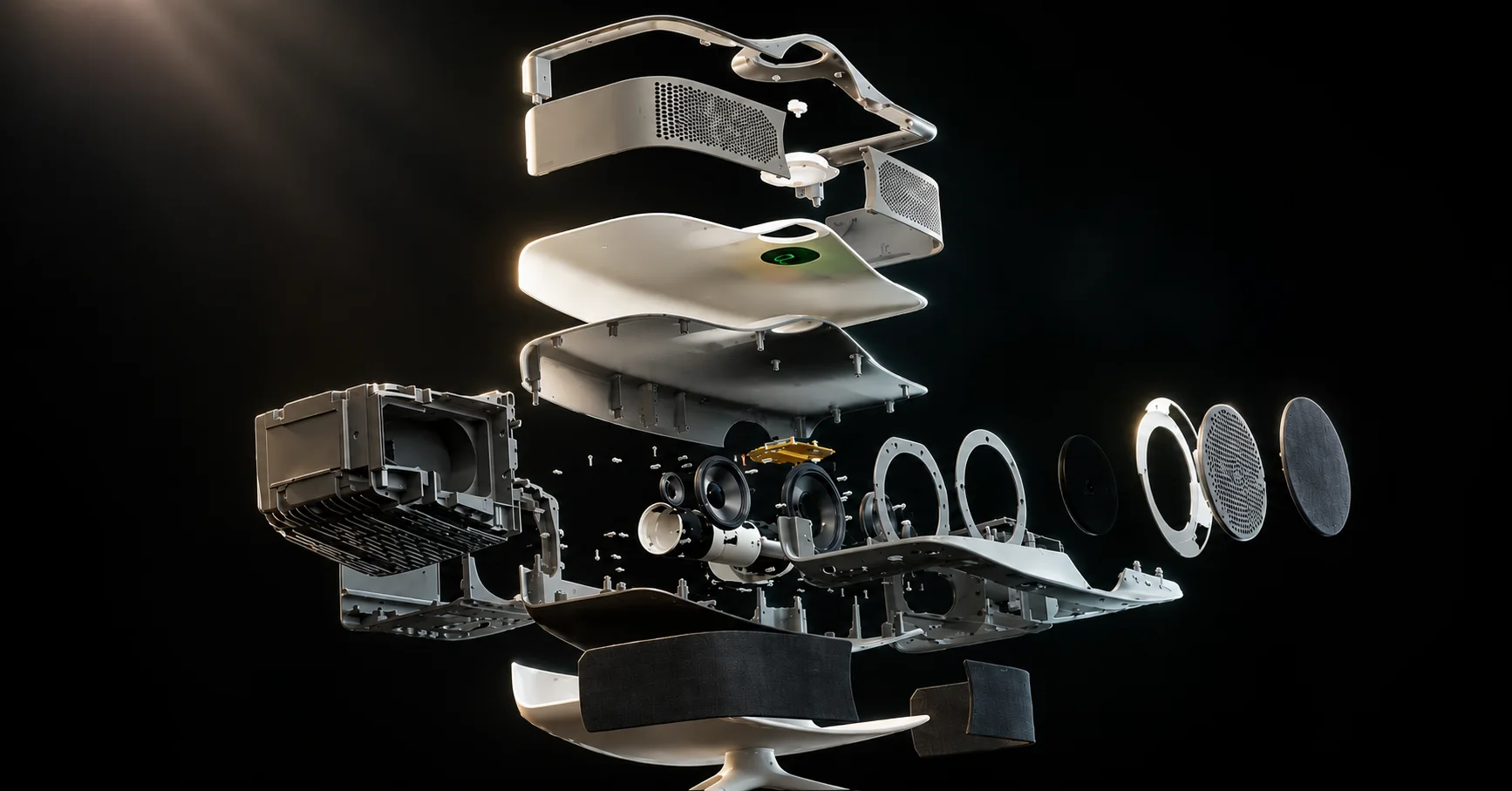
- Assembly and exploded-view sequences
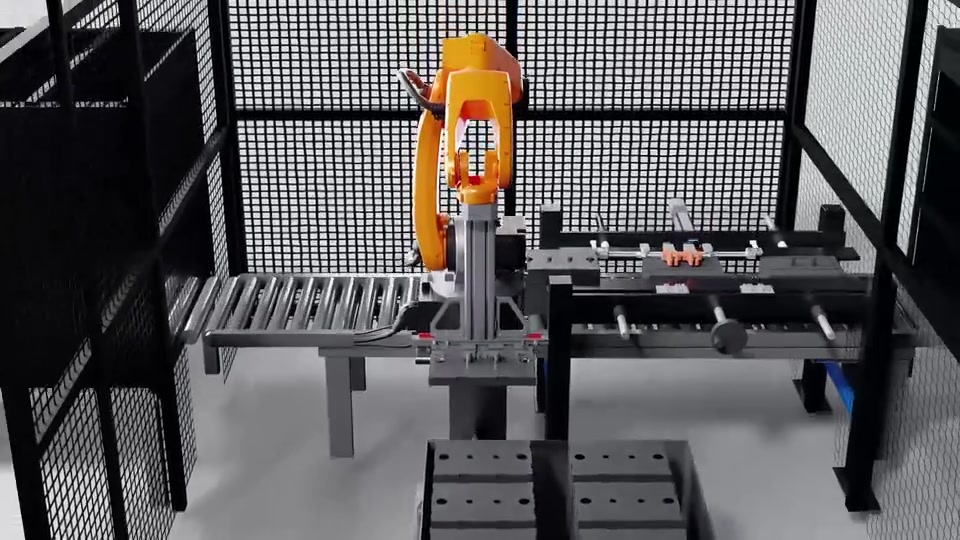
- Cutaways from full cell to single component
- Versions cut for trade show, web and sales use
The Approach
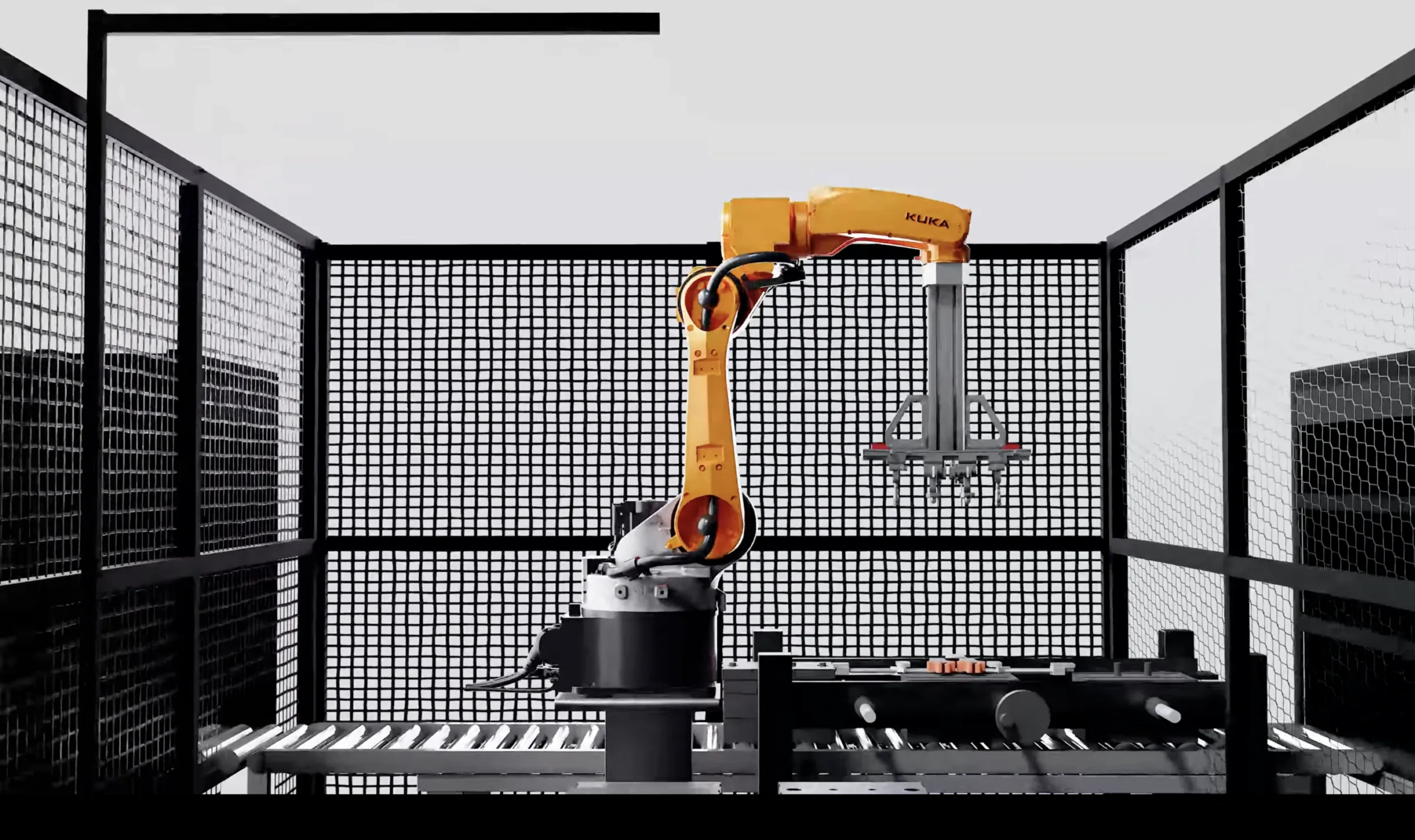
We started with the motion itself. A robot arm's value is in how it moves — reach, repeatability, the choreography of a cell working in sequence — and that is almost impossible to convey in a static image or a spec sheet. 3D animation removes the constraints of a camera on a factory floor: no scheduling around production, no lighting compromises, no filming a machine that may not physically exist yet. We could show the arm from angles no camera could occupy, isolate a single joint, strip away housing to reveal a mechanism, and rebuild it in a single continuous move.
The Result
A visual language for the product that works across the funnel — arresting enough to stop someone at a trade show, precise enough to survive an engineer's scrutiny, and modular enough that individual sequences can be reused as the range extends.
The Work